
Last updated November 21, 2026
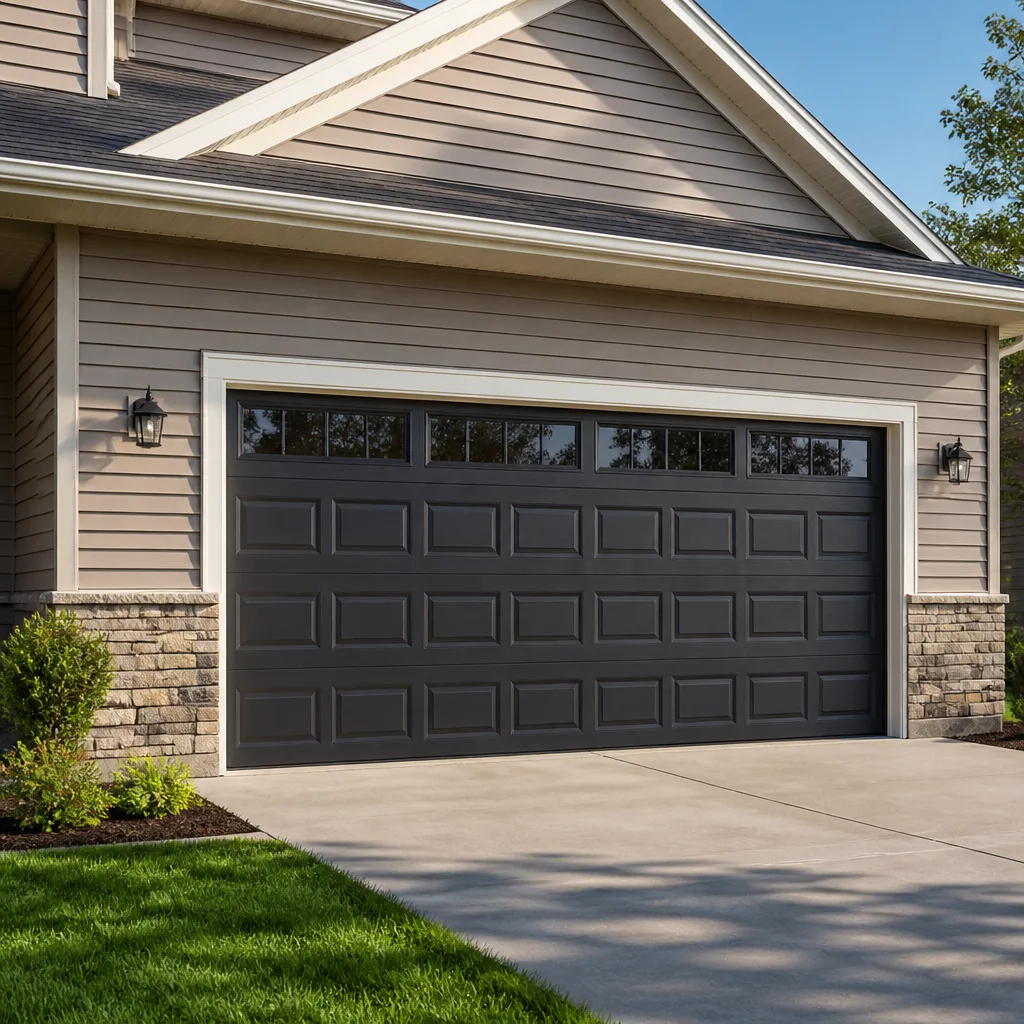 Raised-panel steel
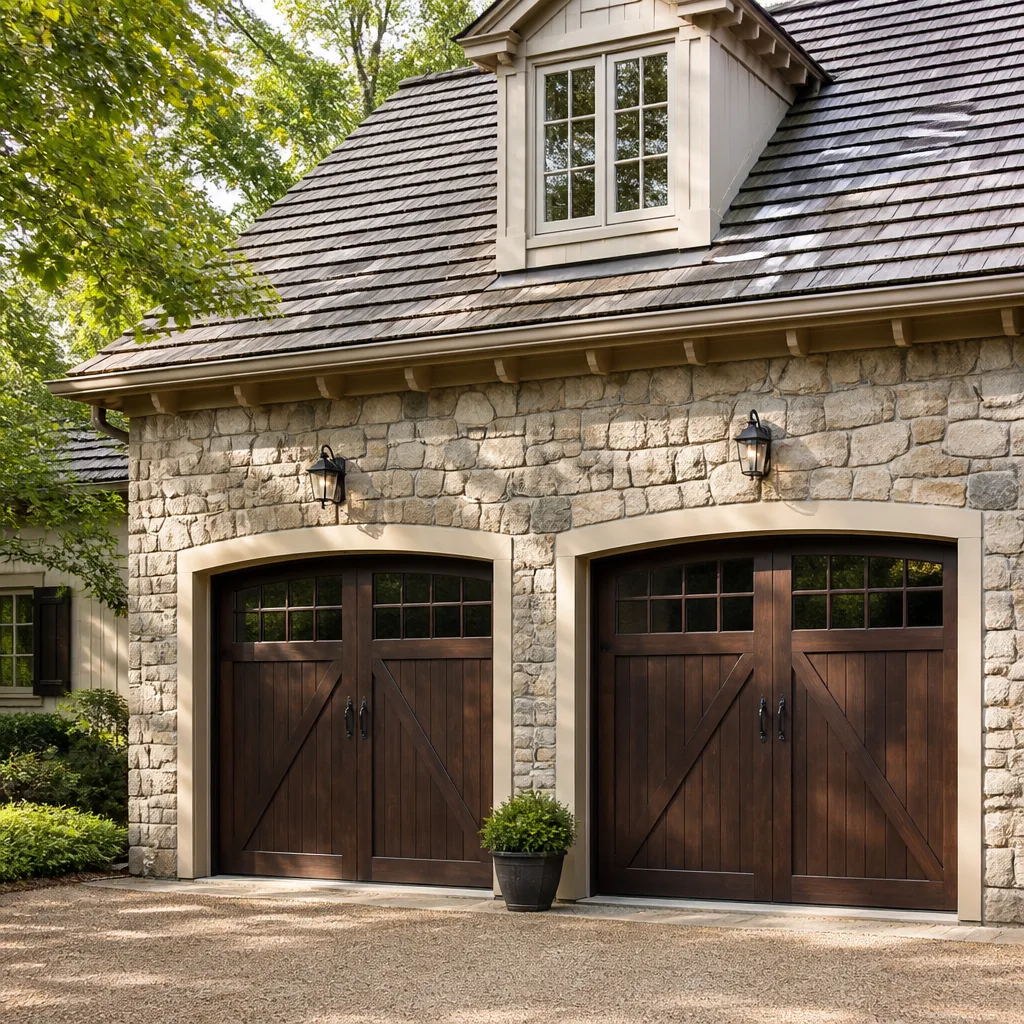 Carriage house
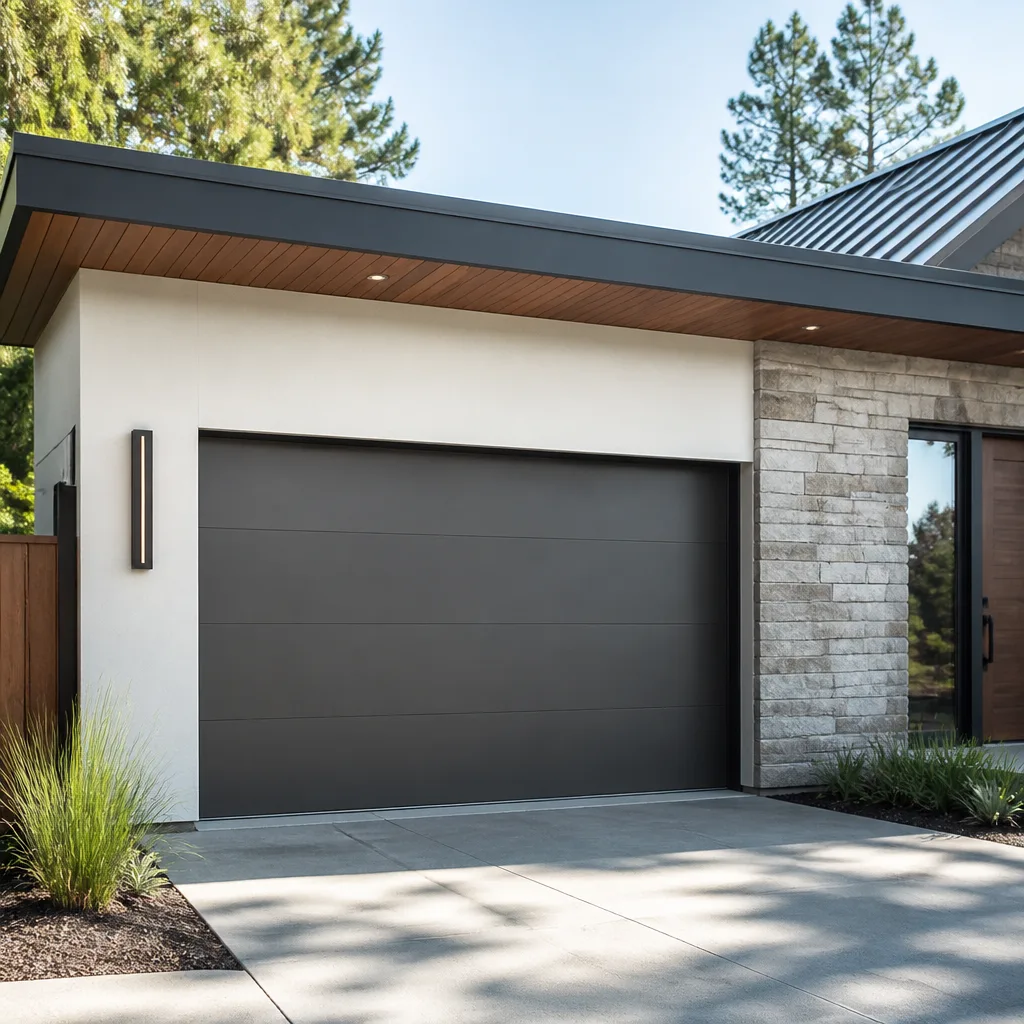 Modern flush
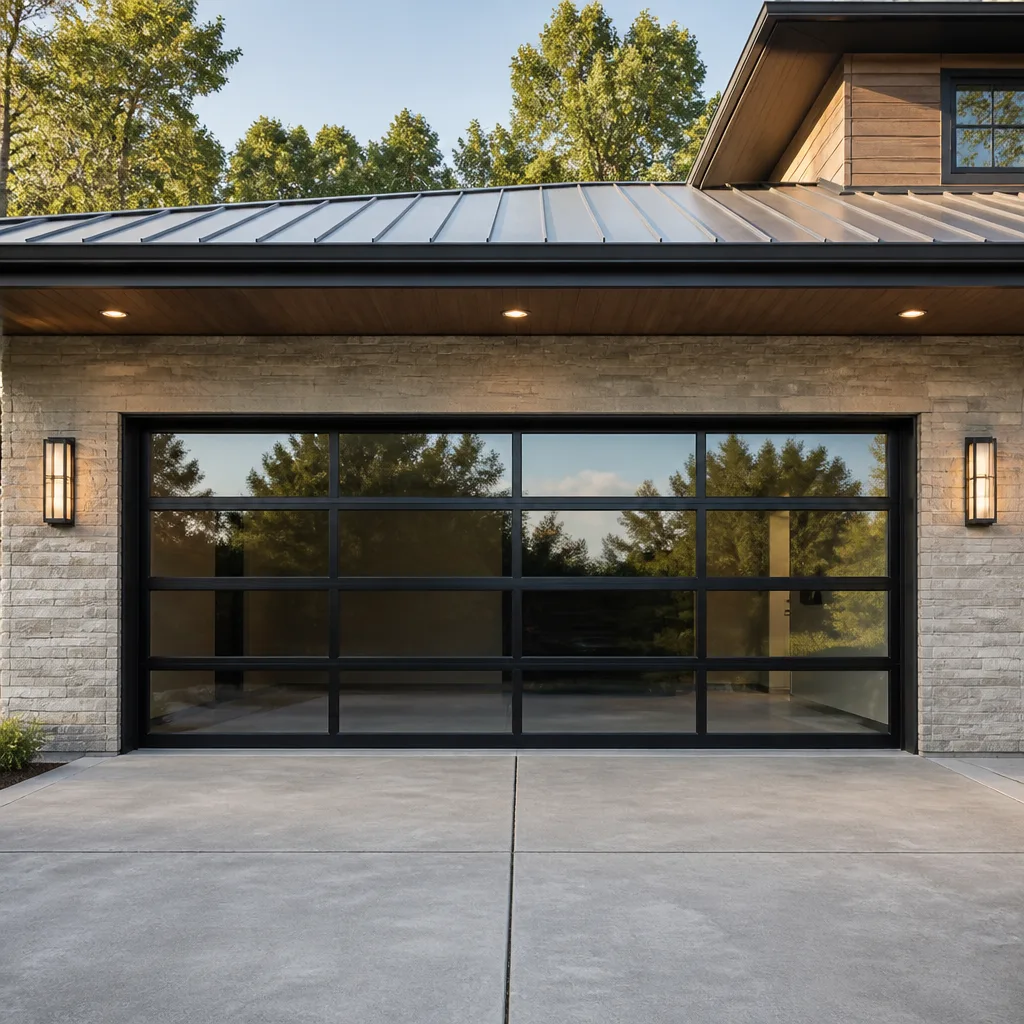 Full-view glass
 LiftMaster openers
 Chamberlain openers
Full 25-point door and opener safety check with every visit - springs, cables, rollers, tracks, and your LiftMaster or Chamberlain opener included
You get a price before we start. It does not change when the pro arrives.
Get your free estimateGarage Door Cost Breakdown: The Plymouth Homeowner’s Reference for 2026
Two Plymouth homeowners can get quotes of $900 and $2,400 for what sounds like the same job, and both contractors can be right. One bid prices a 25-gauge steel door with a standard 6,000-cycle spring on existing tracks. The other prices a thicker insulated door, a heavier spring rated for far more cycles, new track hardware and a belt-drive opener. The totals look like a market gap. They’re really a scope gap. When you compare bids line by line instead of bottom line against bottom line, the numbers start talking sense.
This guide gives you the vocabulary to do that. You’ll learn what each line item actually costs in the Plymouth market for 2026, which variables move the price most, where insulation pays back and where it doesn’t, and which charges show up on some estimates and quietly disappear from others. By the end, you’ll be able to read a garage door quote the way a technician does.
Quick Answer
In Plymouth, a full garage door replacement typically runs $1,200 to $2,800 for a standard single door installed, and $1,800 to $4,200 for a double door, depending on insulation, hardware and opener choices. Repair work is far cheaper: spring replacement typically costs $180 to $340 per spring, opener repair $120 to $350, and panel or track repair $150 to $450. The written estimate always sets the final price, and the work is quoted and agreed before anything starts.
Styles & brands we work with
- Raised-panel steel
- Carriage house
- Modern flush
- Full-view glass
- LiftMaster openers
- Chamberlain openers
Table of Contents
- What’s Actually in a Garage Door Quote? Line by Line
- Why Spring Gauge, Not Door Brand, Drives Longevity
- How Insulation R-Value Changes the Price and the Payback
- The Hidden Costs Most Quotes Leave Out
- What the Plymouth Climate Does to Your Door
- How to Build a Comparison Spreadsheet From Multiple Bids
- What You Can Check Yourself Before You Call
- Repair or Replace? The Real Decision Point
What’s Actually in a Garage Door Quote? Line by Line
A garage door estimate is really five or six smaller estimates bundled together. Split them apart and each one can be judged on its own. Here’s how the line items typically break down in Plymouth for 2026:
- Door panels and sections: $500 to $1,600 for a single door, $800 to $2,400 for a double. Steel is the default; the price climbs with insulation thickness, gauge, window inserts and finish.
- Springs: $180 to $340 per spring installed. A matched pair is usually replaced together, so budget roughly double for a pair.
- Tracks and hardware: $150 to $400 per door. Gauge matters here. Thinner track flexes and pits sooner, especially on doors that see heavy daily cycles.
- Opener: $300 to $650 installed for a belt or chain drive unit, more for smart connectivity or battery backup. Many quotes fold this in silently; some leave it out.
- Labor: $300 to $700 for a standard installation. Two-car doors, high-lift track, or low-headroom setups push labor up.
- Haul-away and disposal: $50 to $150. Ask whether it’s included before you sign.
When you add those lines for a typical Plymouth single-door replacement, you land near the $1,200 to $2,800 range. The variance comes from which version of each line the contractor selected. That’s the entire story of the $900 versus $2,400 bid. One bidder climbed down the spec list; the other climbed up. Neither is wrong until you compare what each line actually buys.
Why Spring Gauge, Not Door Brand, Drives Longevity
Here’s the variable most homeowners never see on a quote, and it’s the one that matters most: spring cycle rating. Springs are rated by wire gauge and cycle life. A budget install that quotes springs at the low end of the range will fail years before a heavier spring, and it usually fails first. That’s not a guess. It’s the predictable physics of a high-tension part doing daily work under constant load.
The door brand matters less than you’d think here. A Clopay door and a Wayne Dalton door of similar weight and size need springs sized to that weight, and the quality of the spring is what determines whether the assembly lasts or starts sagging. We’ve seen this play out across every brand we service, from Genie-equipped doors to Amarr installs, and the pattern holds: cheap installs go cheap at the spring first, because that’s where no one is looking.
So when you compare quotes, ask one direct question:
- What cycle rating is the spring quoted at?
- Is it a single spring or a matched pair?
- What wire gauge, and does the bid explain why that gauge for this door?
- Is the spring rating matched to the door weight, or picked from a generic chart?
A bidder who can answer those four questions in writing is a bidder who sized the job. A bidder who can’t is selling a total, not a system. Since this is high-tension work, spring replacement in Plymouth should always be handled by a trained professional; the springs and cables store enough force to cause serious injury, which is why we treat garage door spring repair as its own specialty rather than an add-on to general repair work.
How Insulation R-Value Changes the Price and the Payback
Insulation is the second biggest price lever after size, and it’s the one homeowners most often over- or under-buy. A non-insulated steel door sits at the bottom of the range. A basic insulated door adds roughly $150 to $350. A high-R-value door with a thermal break and polyurethane core adds $400 to $900 or more, depending on size and finish.
The payback math depends entirely on what’s above the garage. At a Plymouth attached garage, the door shares a wall with living space. An uninsulated door there pulls heat out of the house through that shared wall all winter, and the effect is measurable on your heating bill even if it’s hard to isolate. An insulated door slows that transfer. On a detached or unheated garage, the payback is mostly about comfort, noise and condensation control, not energy savings. In that case, mid-range insulation is plenty.
A simple planning rule:
- Attached garage, heated or used as living space: spring for higher R-value. The door is part of your building envelope.
- Attached garage, unheated, used for storage: mid-range insulation is usually the right call.
- Detached garage: basic insulation for condensation and noise; skip the premium tiers unless you’re out there daily in winter.
Don’t let a salesperson talk you into the highest R-value on the sheet without asking what’s above the ceiling and how tight the rest of the garage is. Insulation is a system, and one good door on a leaky garage still leaks.
The Hidden Costs Most Quotes Leave Out
These are the charges that show up later, or show up on one bid and vanish from another, making the totals impossible to compare. Read every quote for these before you sign.
- Haul-away and disposal: Old doors and hardware have to leave somehow. $50 to $150 typical, and some bidders skip it unless asked.
- Existing hardware disposal: Tracks, brackets, and opener parts don’t fit in a recycling bin. Confirm who removes them and where they go.
- Header reinforcement: If the garage door opening header is undersized or rotted, a new heavier door can require reinforcement before it’s safe to hang. That’s a carpentry item some installers won’t touch and others won’t mention until installation day.
- Track or jamb repair: Worn or bent track has to be fixed for a new door to run true. If the quote doesn’t address existing track condition, ask.
- Smart opener add-ons: Wi-Fi module, battery backup, app control, or keypad entry can add $50 to $200 depending on what’s included with the base unit and what’s sold separately.
- Permit fees: Most cities require a permit for structural or electrical work on a garage door system. Ask your city’s building department and confirm whether the bidder includes the permit or leaves it to you.
A quote that looks $300 cheaper than the others is often $300 cheaper because two of these lines are missing. That’s not dishonesty in every case. Some contractors simply don’t do that work and assume you know. Compare the line lists, not the totals.
What the Plymouth Climate Does to Your Door
Plymouth’s winters are hard on garage doors in ways that don’t show up on the spec sheet. Repeated freeze-thaw cycles tighten and loosen the door’s normal clearances, and the thermal expansion alone can throw a perfectly adjusted door slightly off track by the time spring arrives. That’s why doors that worked fine in October often sound different in February.
Salting and sanding your driveway helps vehicles get out, but the same grit that keeps you moving also finds its way onto the door’s bottom seal and into the track. Over a few seasons, that turns into uneven wear on the rollers and a bottom seal that doesn’t sit flush. That’s moisture ingress territory, and it’s why seals and rollers on a Plymouth door deserve a check at the start of every heating season, not just when something breaks.
The practical takeaway for cost:
- Budget for a bottom seal replacement every few years, $60 to $150 depending on door width.
- Have track alignment checked during any spring or opener service; a bent track is far cheaper before it eats a roller.
- Expect the first cold snap of the year to reveal opener force issues that were fine in July. If the door reverses without an obvious obstruction, that’s a symptom, not a ghost.
Climate also affects insulation choices. In a Plymouth attached garage, winter door drafts are the most common comfort complaint, and they usually trace to the bottom seal and the perimeter weatherstripping before they trace to the door’s R-value. Fix the seals first. Then upgrade the door if you still feel the cold.
How to Build a Comparison Spreadsheet From Multiple Bids
Here’s the practice that separates a smart purchase from a total that looks good in a folder. Build a spreadsheet. Columns are the line items from the section above, rows are the bids, and every cell is a scope item, not a price. This is how you catch the bid that’s quietly excluding the opener or the disposal.
Set it up like this:
- Column A: Line item name (door, springs, tracks, opener, labor, haul-away, permit). List every line you care about even if a bidder didn’t quote it.
- Column B: Spec detail for each line on each bid. Spring gauge. Door R-value. Track gauge. Opener model.
- Column C: Price per line from each bidder. If a cell is blank, the bidder didn’t quote it; enter “not included” rather than zero.
- Column D: Warranty terms per line. Spring cycle warranty is the key you’re watching here.
Once it’s filled in, sort by total only as a last step. The spreadsheet will tell you which bid includes the most scope for the money, and it’ll tell you which bid is missing three lines that the others included. When you call back to ask about the missing items, you’re negotiating scope, not price. That’s the position you want to be in.
If comparing numbers is where you’re stuck, this is a natural point to call Garage Door Repair Plymouth for a free estimate you can put in the same spreadsheet. A written estimate from us is itemized the same way, so it drops straight in as another row. The point isn’t that your numbers go down. It’s that they finally make sense next to each other.
What You Can Check Yourself Before You Call
You can save yourself a service call and a diagnosis fee by checking a few things safely. These are observation tasks, not repair tasks. Never loosen, adjust, or remove a spring or cable yourself; those parts are under high tension and the wrong move is genuinely dangerous. Observe, note, call.
- Watch the door move. Does it travel smoothly, or does it pause, jerk or sound gravelly at the same point every time? Where it stumbles tells a technician where to look.
- Check the balance. Disconnect the opener (pull the release cord with the door fully closed), then lift the door halfway by hand. A well-balanced door holds roughly in place. One that slams down or needs two hands to lift has a spring problem.
- Look at the springs. A spring with a visible gap in the coil is broken. Don’t touch it; just note which side.
- Run the safety reverse test. Place a roll of paper towels under the door and close it. It should reverse on contact. If it doesn’t, stop using the door and call; a door that fails to reverse is a safety issue, not a convenience one.
- Take a photo of the opener label and the inside of the door. Brand and model number save time on the phone, and the photo of the hardware lets us confirm ahead of time what parts we’ll need.
If any of these checks point to springs, cables, or a door that’s hanging unevenly, that’s the signal to stop and call. We work on your brand, and for opener issues specifically, we routinely handle garage door opener repair on the units most Plymouth garages have: LiftMaster, Chamberlain, Genie and Craftsman.
Repair or Replace? The Real Decision Point
The repair-or-replace decision almost always comes down to one question: is the door’s structure still sound? Cosmetic wear, a tired opener, or a broken spring on an otherwise solid door is a repair. A door with cracked panels, a rusted-through bottom section, or a bent track that’s pulled the whole system out of alignment is replacement territory.
Use these rough thresholds as a guide:
- Repair if the door is under roughly 10 years old, panels are intact, and the issue is mechanical (spring, opener, roller, cable).
- Repair if the door is older but the panels and structure are sound and only one component has failed.
- Replace if two or more panels are damaged, if the door has visible structural sag, or if the same component has failed repeatedly after repair.
- Replace if you’re already planning an insulation upgrade or an opener replacement and the door itself is near the end of its service life. Doing all three at once usually costs less than three separate service calls.
For repair-only situations, the numbers are predictable: a spring repair is $180 to $340 per spring, an opener repair $120 to $350, a panel or track fix $150 to $450. Those are estimates, and the written quote is what counts. A full replacement holds far more variables, which is why the spreadsheet approach matters most there.
If the diagnosis is a broken or worn spring, we handle that as its own specialty, with brand-specific hardware and the right tools for high-tension work. If it’s a full replacement, we work across Clopay, Amarr, Wayne Dalton and the other major manufacturers, so we can source the right spec for the opening you actually have rather than fitting the door to what’s in stock.
Common Mistakes to Avoid
- Comparing totals instead of line items. A $2,400 bid and a $900 bid are usually not the same job. Build the spreadsheet first, then compare. Most Plymouth homeowners who feel cheated were actually sold two different scopes and never given the tool to see it.
- Ignoring the spring cycle rating. This is the cheapest corner to cut on a quote and the most expensive one to live with. Ask what cycle rating is quoted and get it in writing. If the bidder can’t answer, that’s your answer.
- Assuming a brand name on the door means quality everywhere. The door brand is one part of the system. The springs, the track gauge, the opener and the install quality all determine how long it lasts. A premium door on light hardware will still let you down.
- Paying for high R-value before fixing the seals. A drafty bottom seal and worn perimeter weatherstripping undo a premium insulated door. Fix the cheap stuff first, then decide what the door needs.
- Not asking about haul-away. If the bid says nothing about disposal, assume it’s not included and ask. Otherwise you’re the one figuring out how to get a 200-pound door section to the transfer station.
- Letting anyone but a trained technician touch the springs or cables. This is the single most dangerous part of the system. No YouTube video makes a high-tension spring safe to handle. This is a call-a-professional item, full stop.
- Forgetting to confirm the permit. Most cities require a permit for garage door structural or electrical work. Ask your city’s building department what applies to your project and confirm who’s pulling it.
See the difference
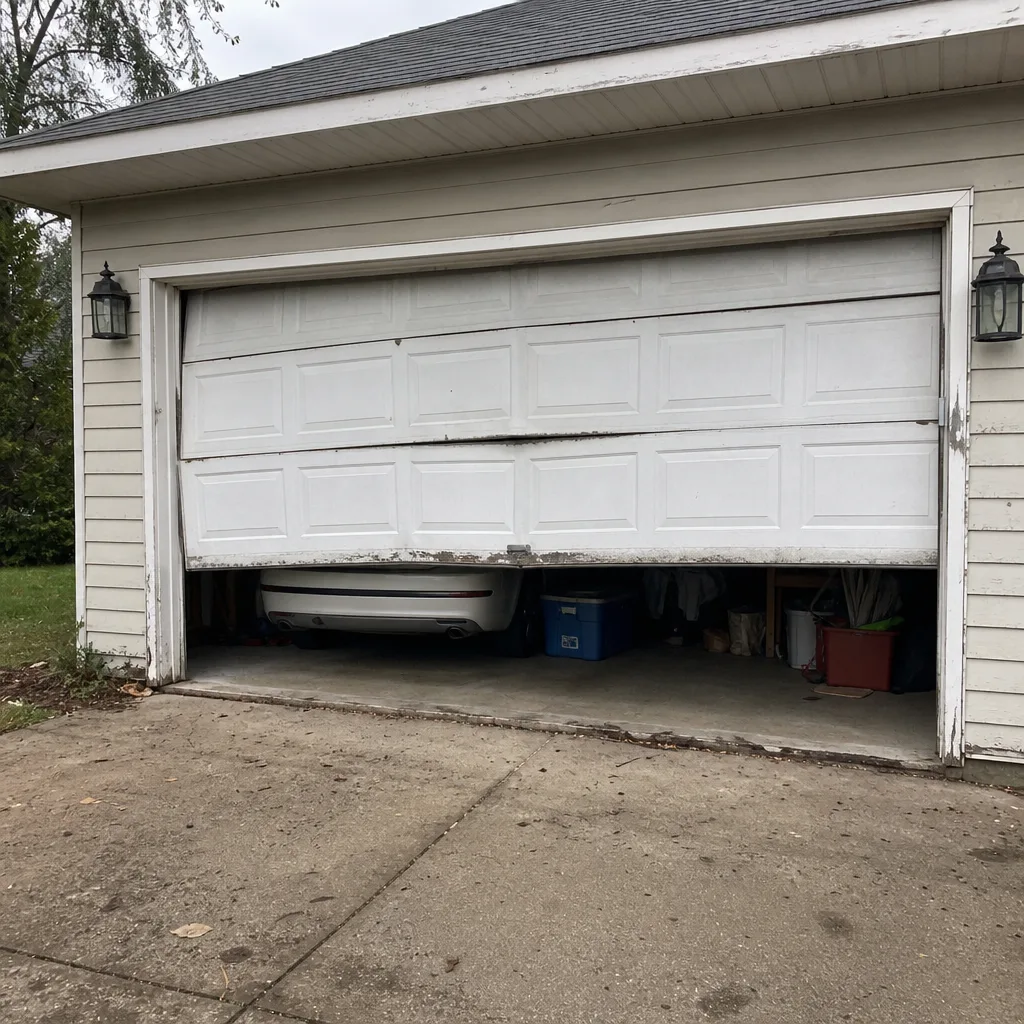 Before
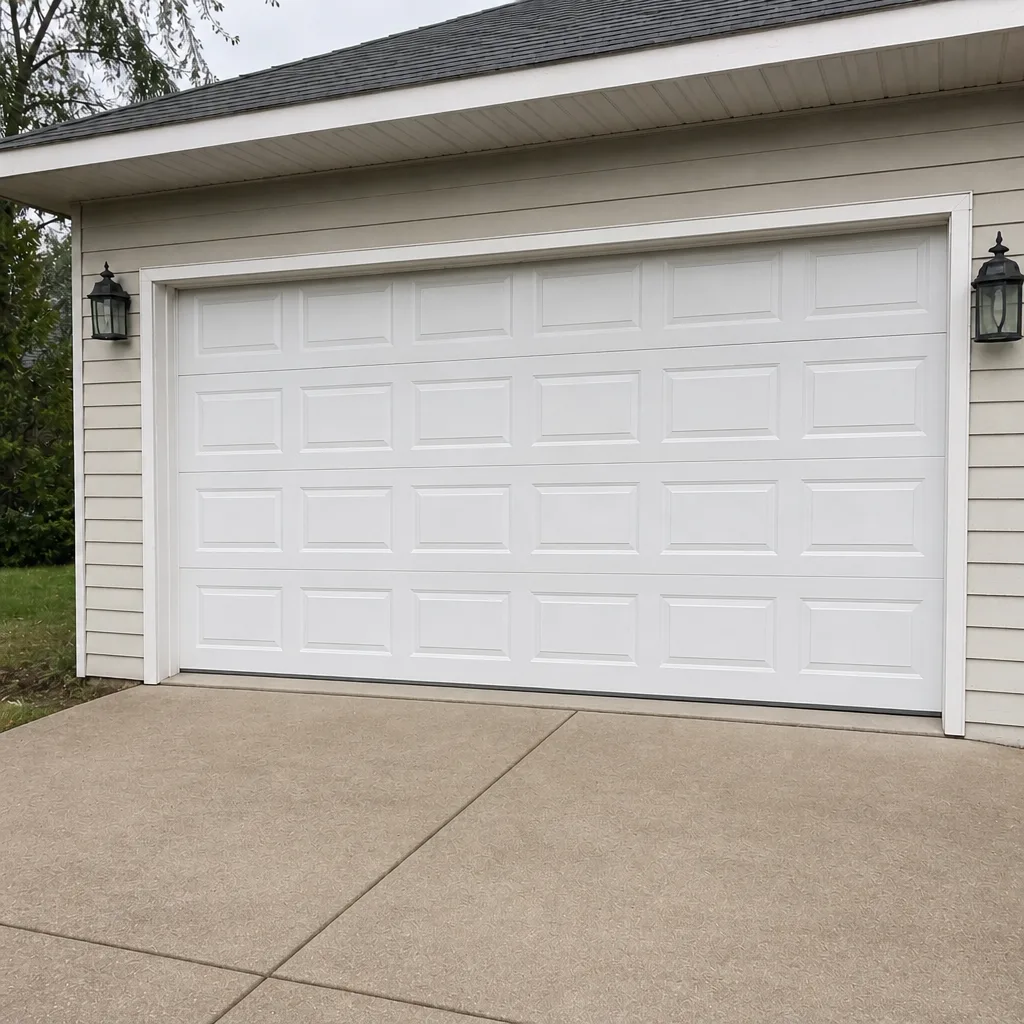 After
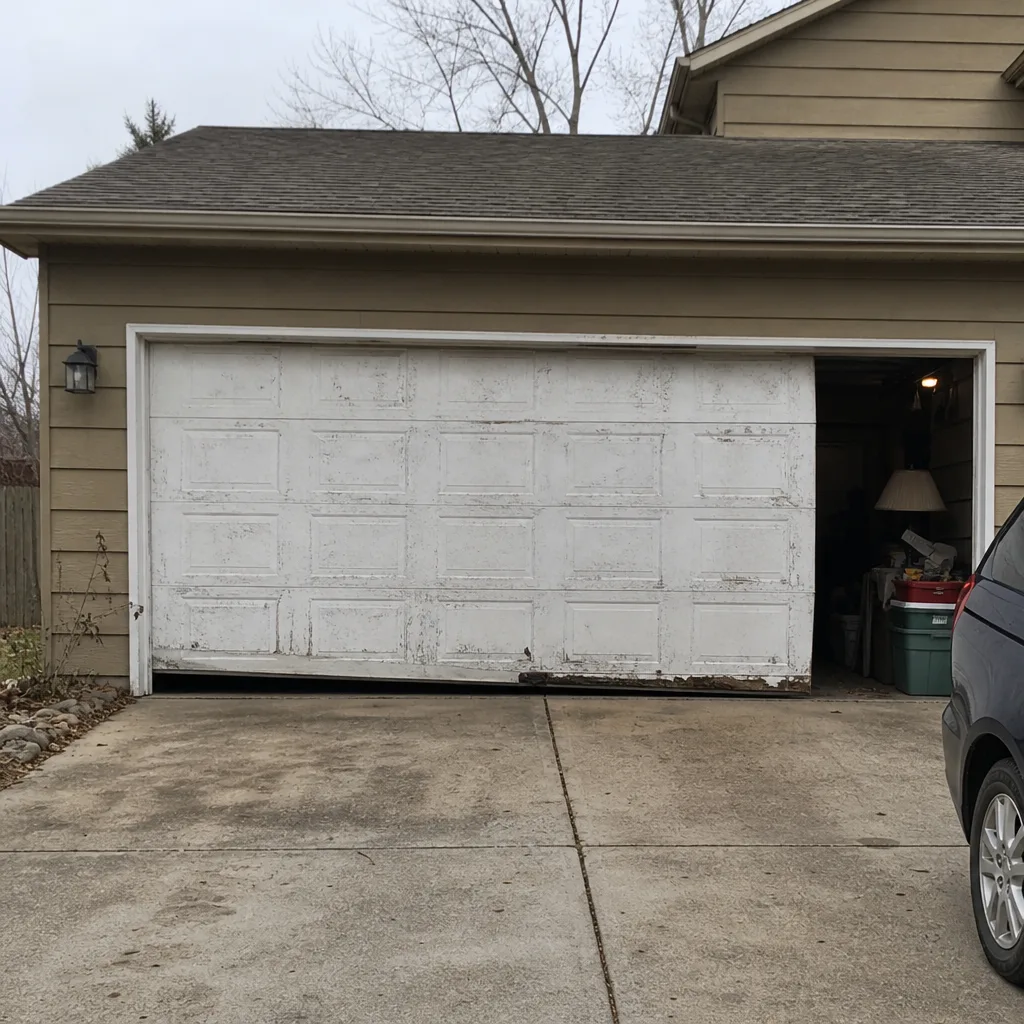 Before
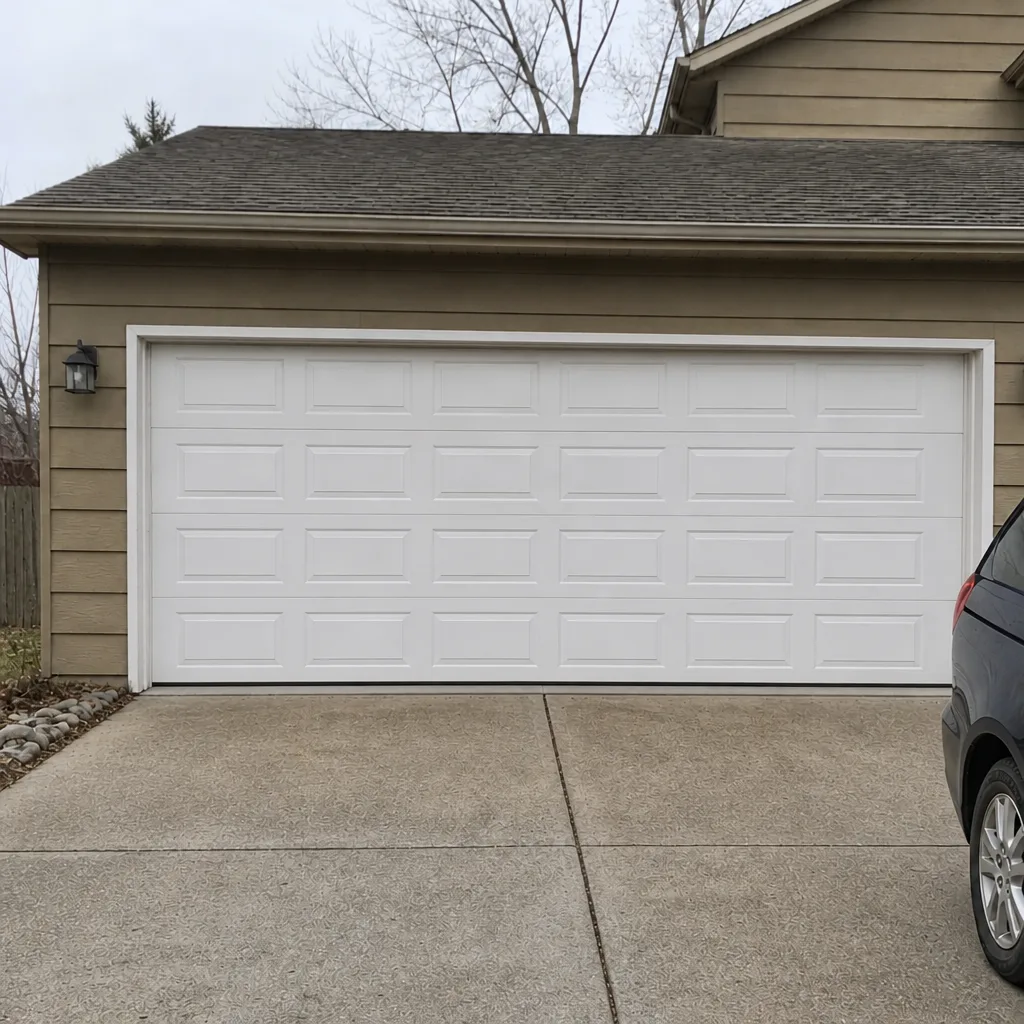 After
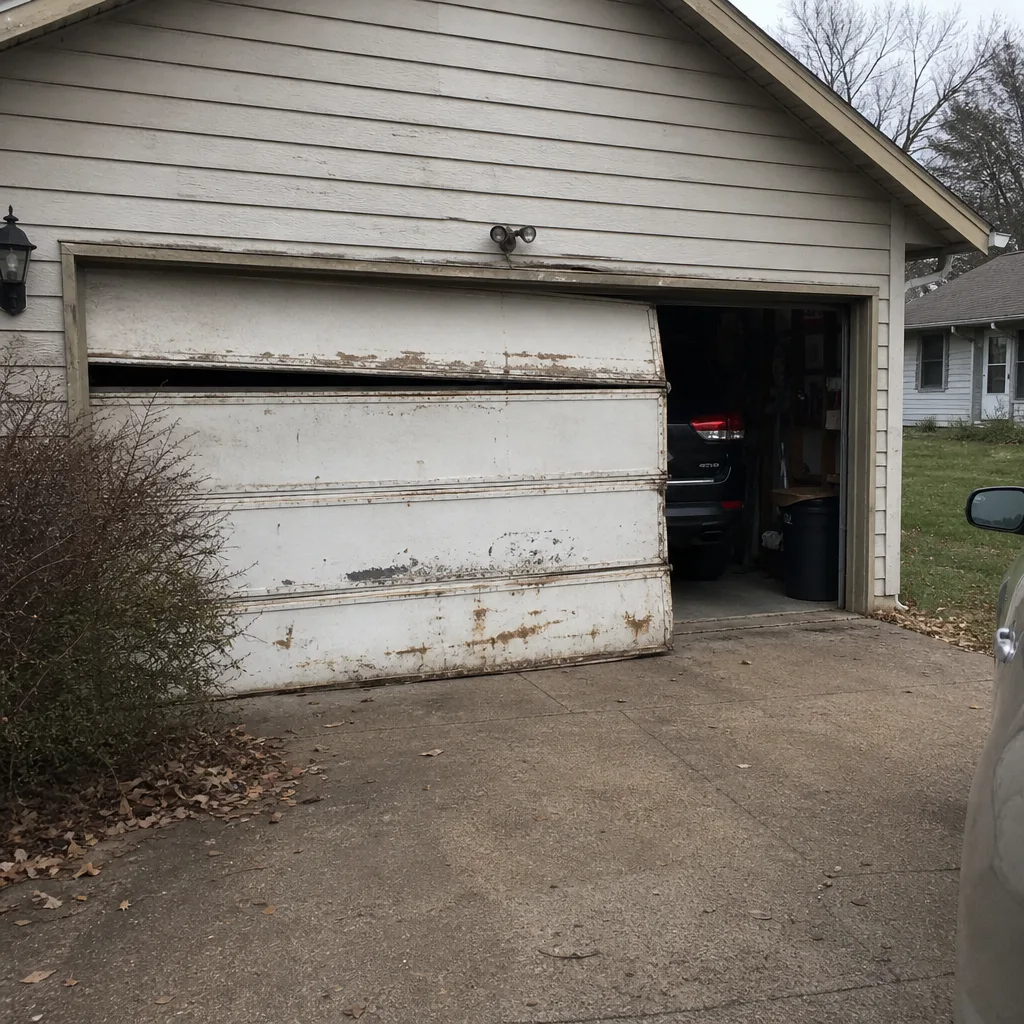 Before
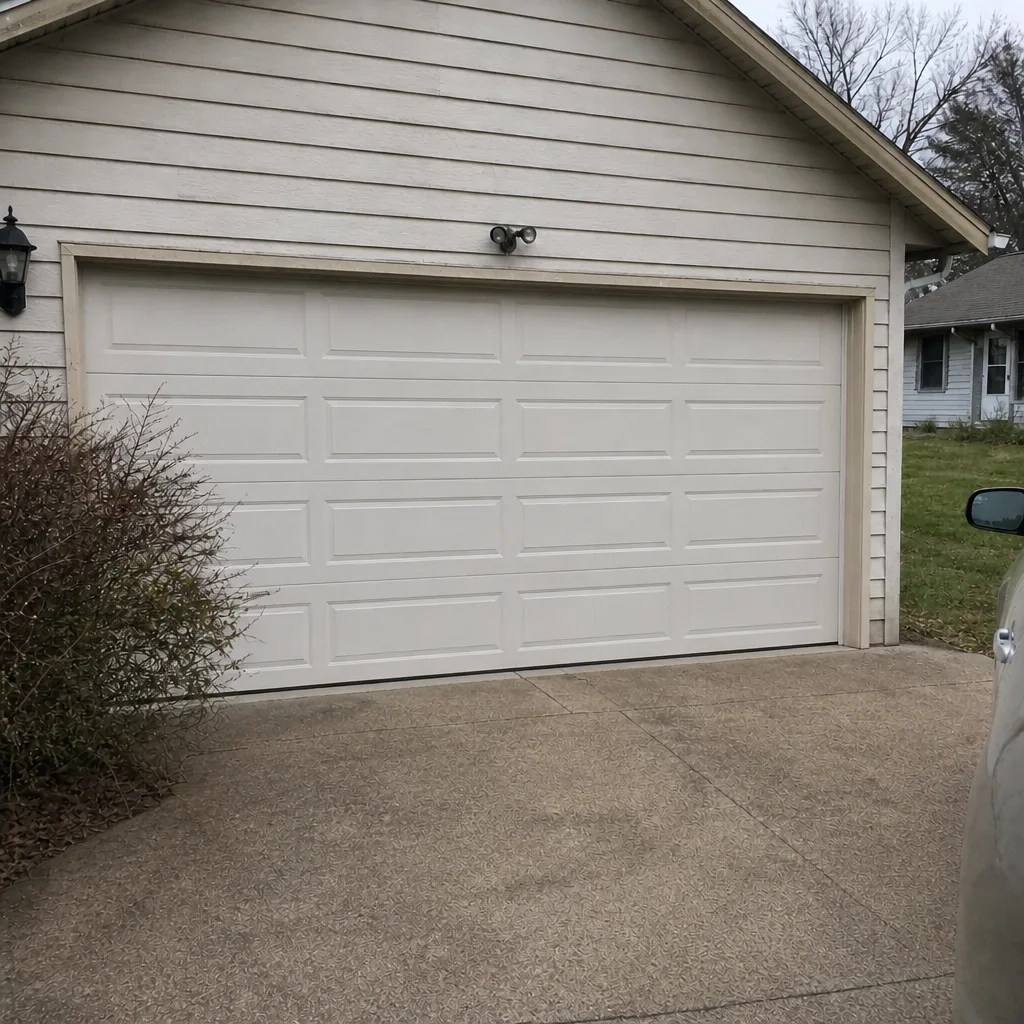 After
When to Call a Professional
A snapped spring, a door that drops unevenly, a cable that comes loose, or a door trapped at an angle all warrant a trained professional rather than a do-it-yourself attempt. The same is true for any opener that reverses unexpectedly, runs with the door disconnected, or won’t respond to the remote after a battery change. These are genuine safety items, and the cost of a wrong repair is much higher than the cost of the right one. For a broken door that can’t wait, our emergency garage door service is real availability, not a marketing line. We answer 24/7. Fast dispatch from 7am to 7pm, Sunday through Friday. Garage Door Repair Plymouth offers free estimates in Plymouth. Call (866) 937-8168.
Frequently Asked Questions
A standard single-door replacement in Plymouth typically runs $1,200 to $2,800 installed, and a double door $1,800 to $4,200. The range covers insulation upgrades, opener choices and hardware quality, which is why comparing line items matters more than comparing totals. Call (866) 937-8168 for an exact quote; estimates are free.
Repair is almost always cheaper when the door’s structure is sound: spring repair is $180 to $340 per spring, opener repair $120 to $350, and panel or track repair $150 to $450. Replacement only makes financial sense when two or more panels are damaged, the frame is out of alignment, or you’re already upgrading insulation and opener together. Call (866) 937-8168 to get a diagnosis before you decide; estimates are free.
No. The written estimate is the price, and we confirm all work with you before anything starts. If something unexpected turns up, like a bent track behind a panel or an undersized header, we explain it and re-quote before we touch the door, never after. Call (866) 937-8168 for a free estimate.
We’re closed Saturday and open Sunday through Friday, 7am to 7pm, and emergency service is a real offering, not a dispatch trick. We answer the phone 24/7, and a call outside those hours is booked into the next opening, Sunday through Friday, 7am to 7pm. Call (866) 937-8168 to lock in your slot.
We service eight of the most widely installed brands: LiftMaster, Chamberlain, Genie, Clopay, Amarr, Wayne Dalton, Craftsman and Raynor. That brand familiarity means our technicians show up knowing the hardware, not learning it on your driveway. Call (866) 937-8168 to confirm your model.
A standard single-door installation is typically a one-day job, and most double doors fit within the same. Insulated premium doors, high-lift track, or opener upgrades can run longer, and we’ll tell you up front which category your job falls into. Call (866) 937-8168 and we’ll walk through the schedule with you.
The Bottom Line
A garage door quote is a bundle of smaller decisions, and the total only tells you what those decisions added up to. The two Plymouth homeowners with the $900 and $2,400 bids weren’t looking at chaos. They were looking at two different scope lists. Split the quote into its lines, watch the spring gauge and the insulation R-value, ask what’s really included in haul-away and permits, and throw it all in a spreadsheet. Then the numbers make sense. When you’re ready to add one more row, our written estimate is itemized the same way, so it drops straight in. If you’d rather skip the spreadsheet and just talk it through, we’re happy to help.
Call us at (866) 937-8168 for a free estimate. We answer 24/7. Fast dispatch from 7am to 7pm, Sunday through Friday. Whether it’s a spring that just went or a full replacement in the planning stage, garage door repair is the only thing we do, and we’re set up to do it right the first time.
Written by the team at Garage Door Repair Plymouth.