
Last updated November 21, 2026
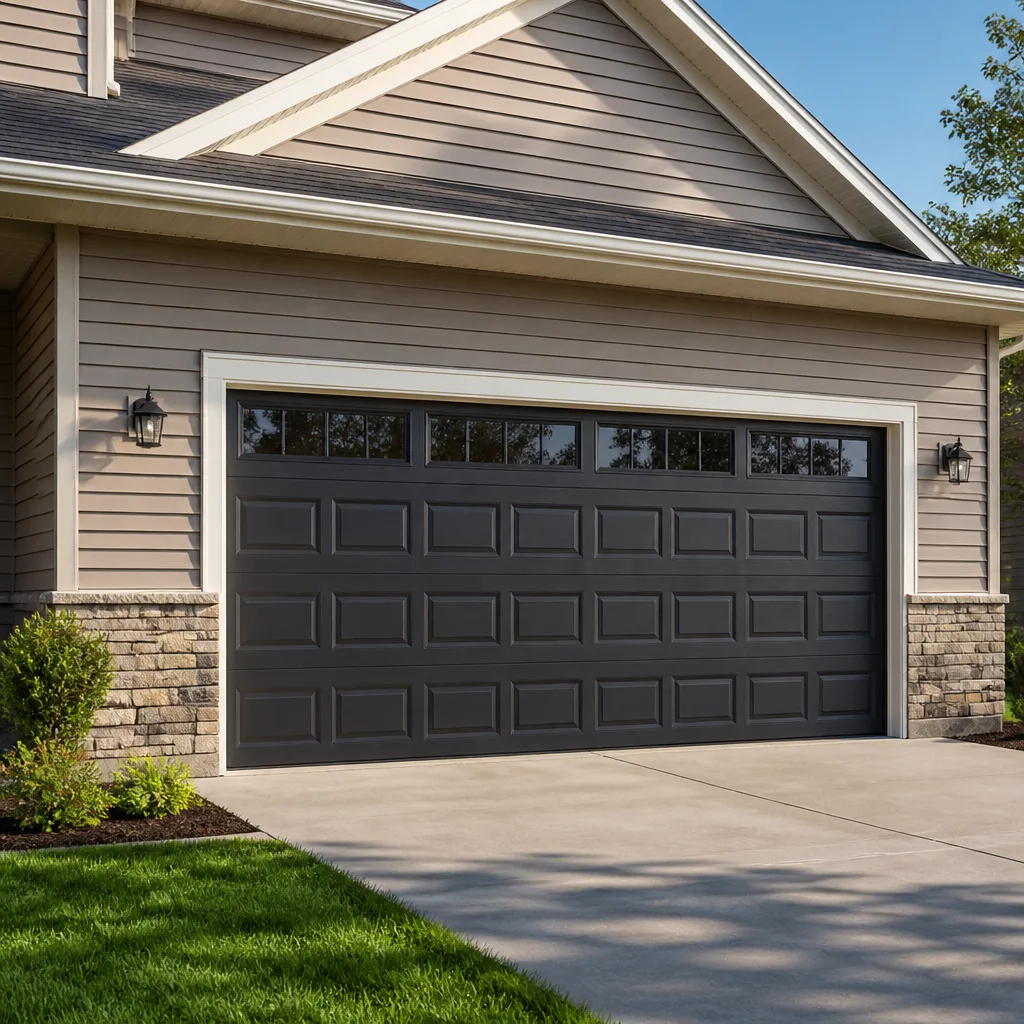 Raised-panel steel
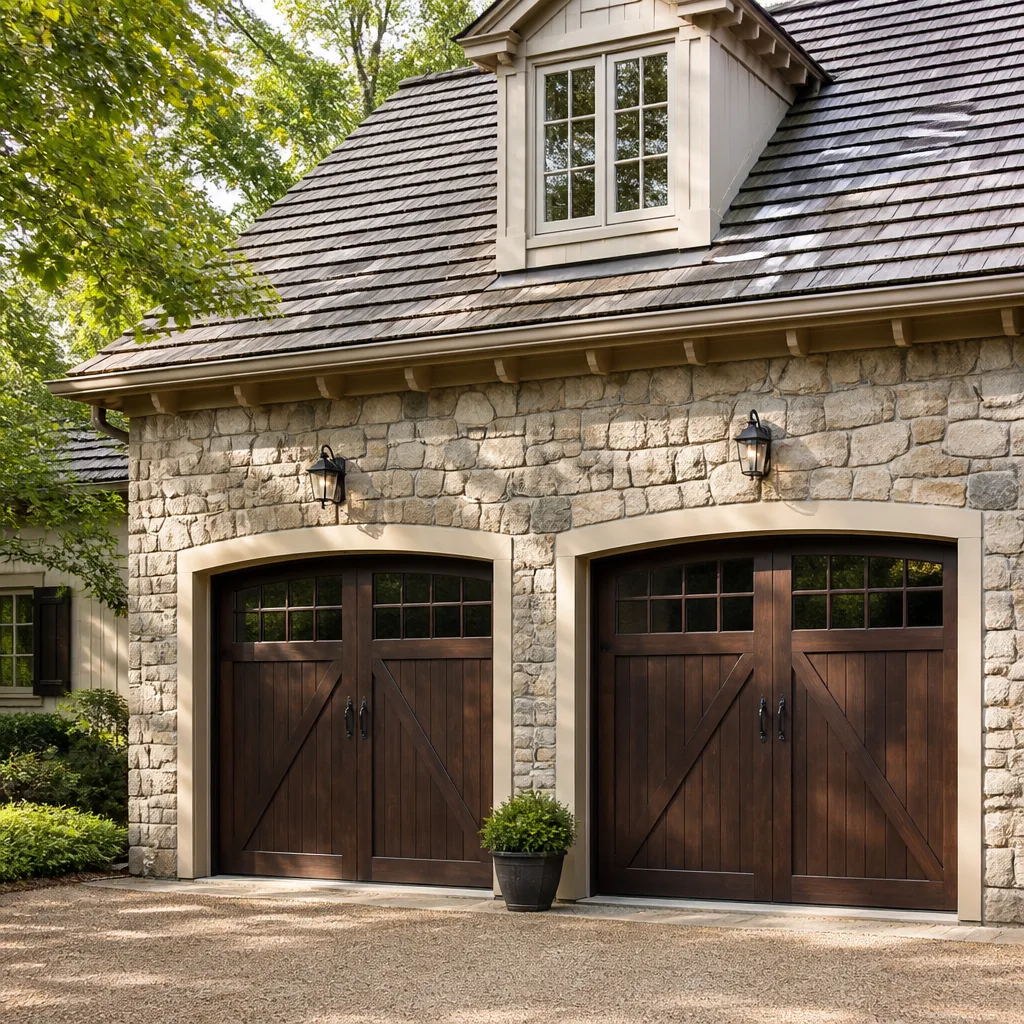 Carriage house
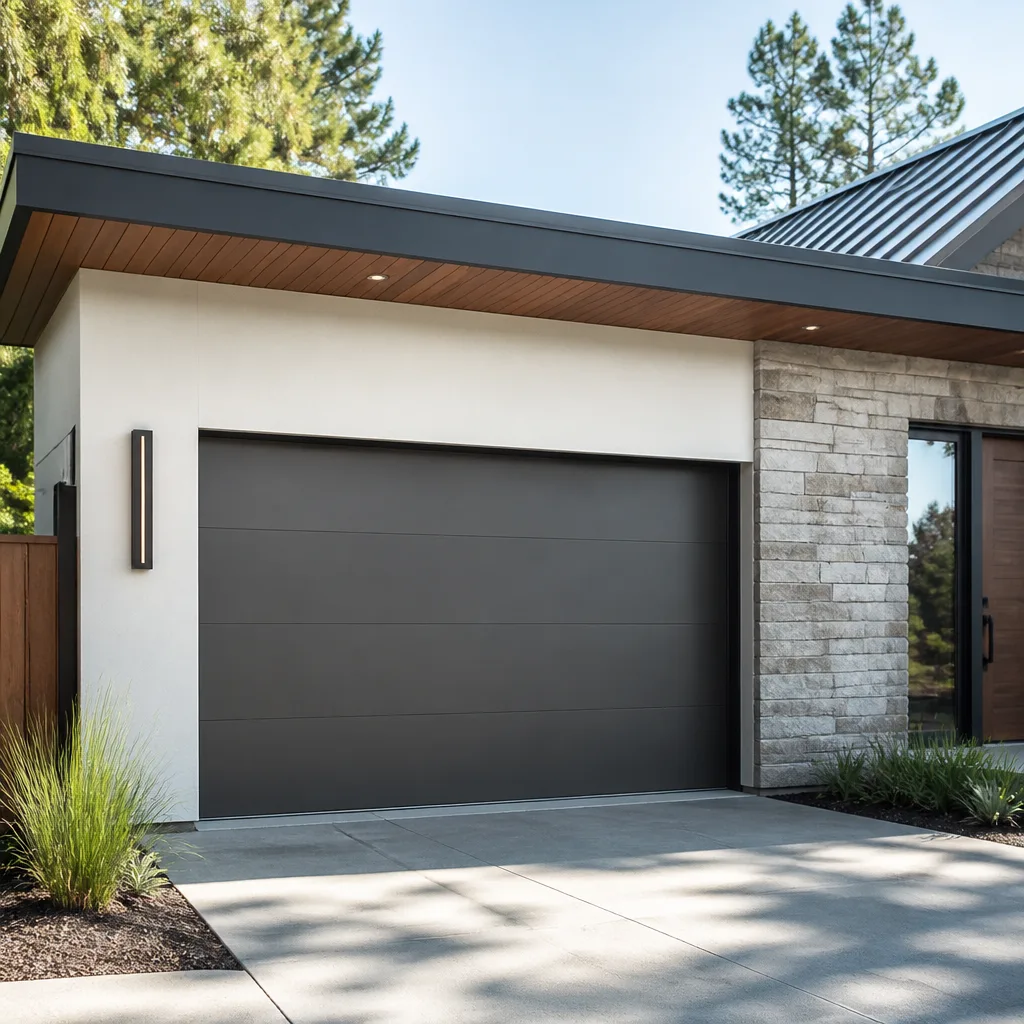 Modern flush
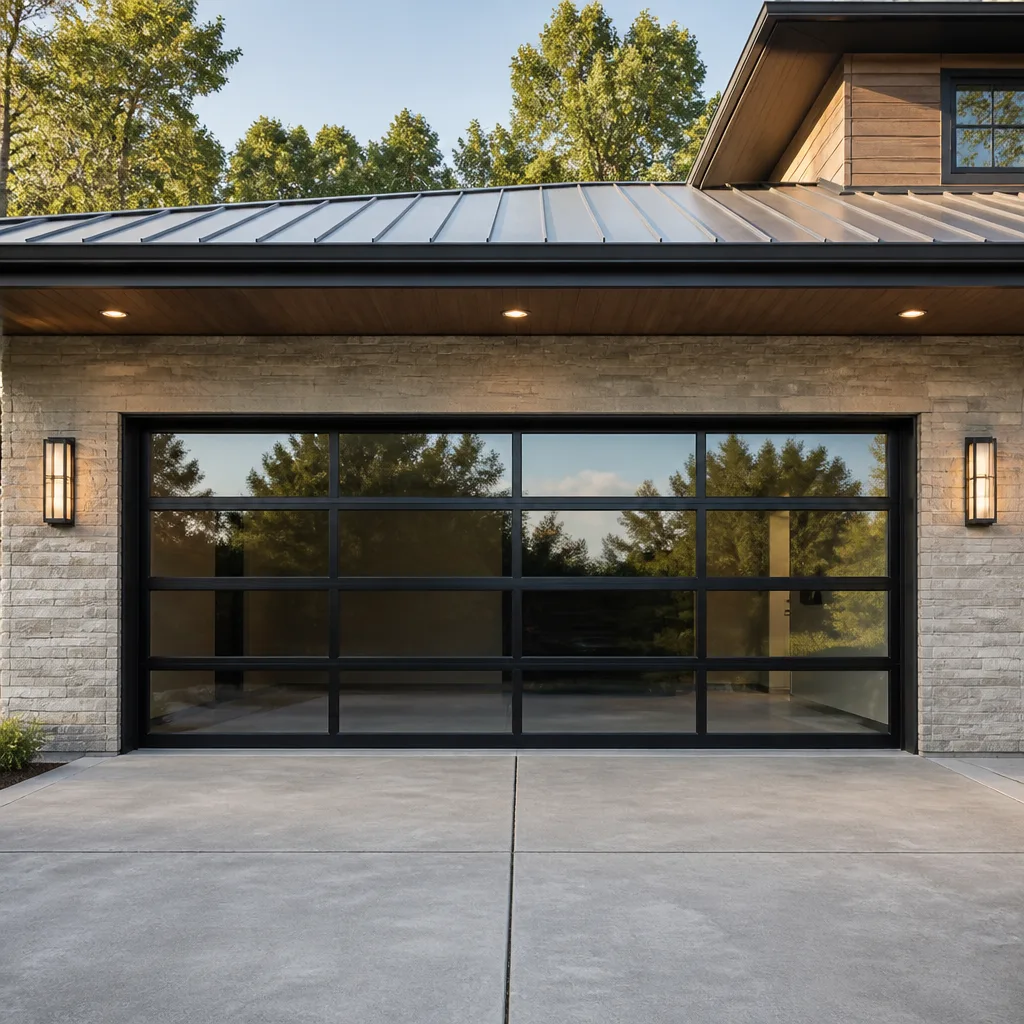 Full-view glass
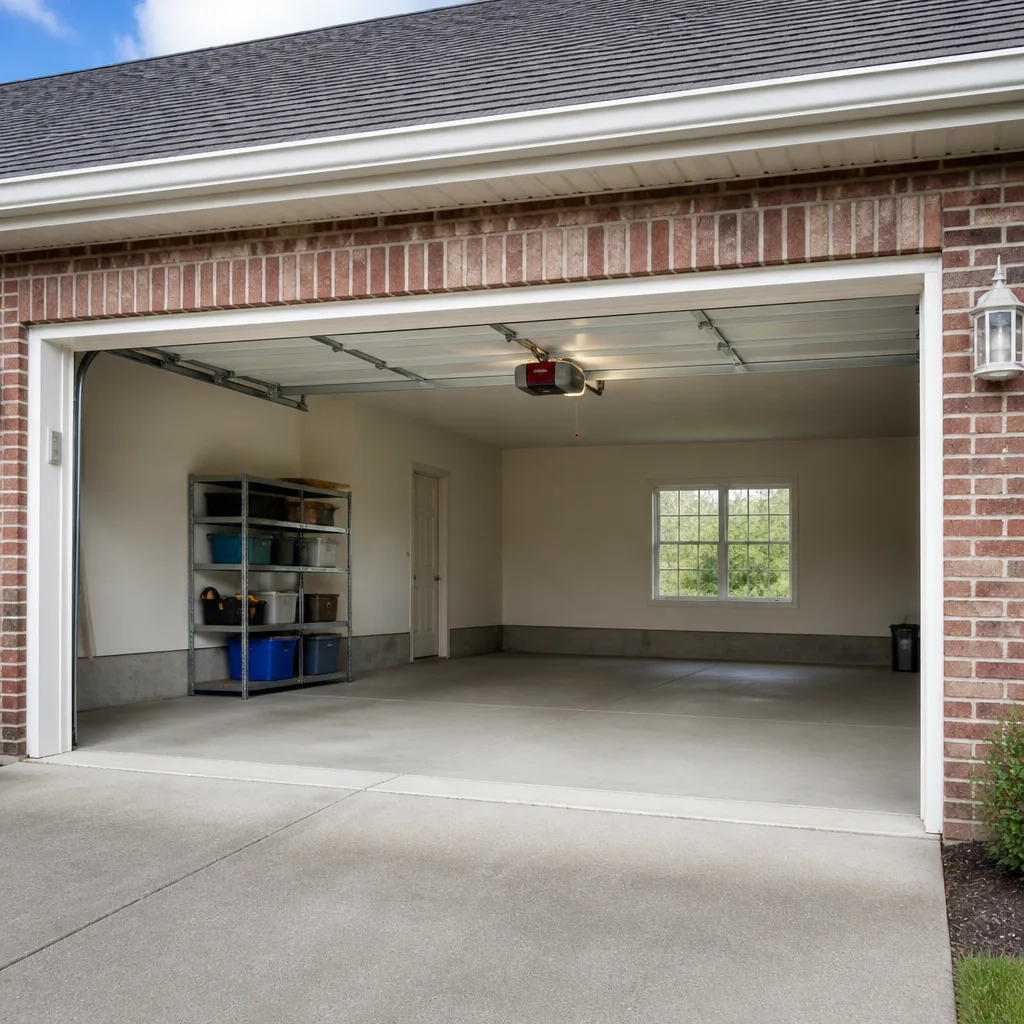 LiftMaster openers
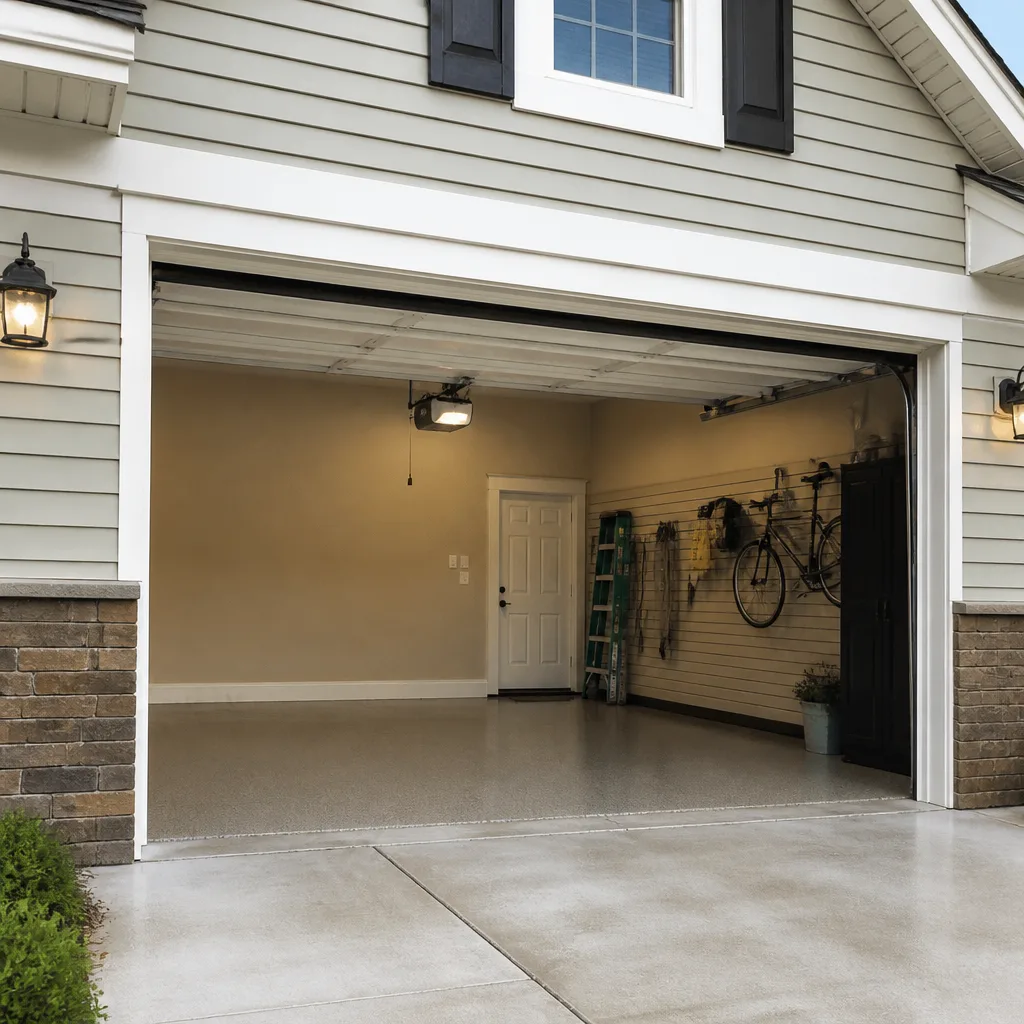 Chamberlain openers
Full 25-point door and opener safety check with every visit - springs, cables, rollers, tracks, and your LiftMaster or Chamberlain opener included
You get a price before we start. It does not change when the pro arrives.
Get your free estimateThe Complete Guide to Garage Doors in Plymouth
Most Plymouth homeowners replace their garage door based on looks alone, then spend the next decade working around a system that was never matched to their insulation needs, header clearance, or subdivision covenants. A garage door is the largest moving object on your property, and in Plymouth it runs through some of the harshest temperature swings in the state. That combination turns what looks like a cosmetic purchase into a decision that touches energy bills, spring life, and whether the door still sits flush in January. This guide covers how Plymouth’s climate and housing stock actually treat garage doors, which materials hold up, what your HOA may allow, and when a repair makes more sense than a replacement. It’s written for homeowners who use their garage every day and want the decision made once, correctly.
Quick Answer
A garage door in Plymouth should be chosen and maintained around the local freeze-thaw cycle, your garage’s headroom and track layout, and any HOA color or material rules in your subdivision. Steel and composite doors handle Plymouth’s humidity swings best, torsion springs need to be sized for repeated cold cycles, and bottom seals are the part that fails first. Repair is usually the right call for springs, cables, rollers, and openers; replacement makes sense when panels are rusted through, sections are warped, or the door is the wrong type for the garage’s construction.
Styles & brands we work with
- Raised-panel steel
- Carriage house
- Modern flush
- Full-view glass
- LiftMaster openers
- Chamberlain openers
Table of Contents
- How Plymouth’s Climate Affects Your Garage Door
- What Plymouth’s Ranch and Two-Story Garages Demand
- HOA Color and Material Rules in Plymouth Subdivisions
- R-Value Claims vs. Real Thermal Performance
- Which Door Materials Hold Up in Plymouth
- Repair or Replace: How to Decide
- Springs, Openers, and the Parts That Fail First
- Buying a New Door in Plymouth: Step by Step
How Plymouth’s Climate Affects Your Garage Door
Plymouth sits in a climate with real winter cold and real summer humidity, and the door absorbs both. The freeze-thaw cycle is the part that does the quiet damage. Water gets into a seam, a seal, or a panel joint, freezes, expands, and works the joint open a little more each year. Over a few seasons that shows up as a bottom seal that no longer touches the floor, a panel that no longer lines up, or a torsion spring that’s lost tension.
Here’s what that means for the specific parts of your door:
- Bottom seals are the first casualty. Rubber and vinyl harden in cold, crack, and stop sealing. A failed seal lets snowmelt and cold air under the door, which then freezes to the threshold.
- Torsion springs cycle constantly in a climate with wide temperature swings, and they’re sized by door weight and cycle count, not guessed. A spring that was undersized for a heavier insulated door will fail early.
- Steel panels are fine against cold but vulnerable at the bottom edge, where road salt tracked in on a vehicle sits against the paint and starts rust from under the coating.
- Wood and wood-composite components move with humidity. Sections that swell in July and shrink in January work their joints and finish loose.
- Openers see more resistance in cold months. A worn gear or a tired logic board often shows itself first on the coldest morning of the year.
None of this is a reason to panic about your door. It’s a reason to look at the seal and the spring tension before winter rather than after. In our experience, most Plymouth door failures trace back to a part that gave a warning and wasn’t checked.
What Plymouth’s Ranch and Two-Story Garages Demand
Most Plymouth homes have attached garages, and most of those follow either a ranch layout or a two-story layout with the garage tucked under or beside living space. Those two layouts ask different things of a door, and national product guides tend to skip the difference.
Ranch layouts typically give you a standard-height opening with a shallow ceiling above the tracks. That’s usually workable, but it limits how much of a high-lift track conversion is possible, and it means an opener has to fit in the space between the door’s travel and the ceiling. If you’re adding storage above the garage or finishing the ceiling, tell the installer before the measure, not after.
Two-story layouts often have more headroom but tighter side clearance, because the garage shares a wall with the house and the tracks run close to it. Low-headroom situations get solved one of two ways: a low-clearance track kit that hugs the ceiling, or a side-mount opener that removes the overhead rail entirely. Neither is a universal upgrade; each depends on what your framing actually allows.
Headroom and track configuration also decide which opener type is realistic. A standard belt or chain opener needs overhead room. A jackshaft or side-mount opener needs wall space beside the torsion bar. LiftMaster and Chamberlain both make models in each category, which is part of why we ask about your layout before we quote anything. The measure is where a door decision gets made concrete.
HOA Color and Material Rules in Plymouth Subdivisions
Plymouth has a lot of planned developments with architectural review requirements, and an HOA can stop a door purchase after the fact. The rule of thumb: check before you order, not after delivery. A door that violates the covenant may have to be replaced again at your cost, and the installer won’t take it back once it’s on the truck.
Here’s how to check without a runaround:
- Read your declaration or architectural guidelines. Look specifically for language about garage doors, exterior finishes, and approved color palettes.
- Find out whether your HOA requires a written approval before exterior changes. Many do, and the process usually means a form plus your product spec sheet and color sample.
- Ask about material restrictions. Some covenants specify painted steel or a particular panel style and quietly rule out certain wood or composite looks.
- Get the approval in writing and keep it. It protects you if a covenant question comes up later.
- Confirm your city’s permit position as well. Most cities require a permit for structural changes or a new door system, so ask Plymouth’s building department what applies to your job before work is scheduled.
Color is usually the sticking point. A door that matches your trim and siding in one light can read very differently on the elevation, and HOAs tend to evaluate the whole elevation, not just the door. Ask for a physical color sample if the manufacturer offers one.
R-Value Claims vs. Real Thermal Performance
R-value tells you how well a door’s panel resists heat flow in a laboratory test. It does not tell you how well your garage will hold temperature once the door is installed in your house. The gap between the two is where a lot of Plymouth homeowners end up disappointed.
Three things erode real-world performance past the label:
- Air infiltration at the perimeter. Weatherstripping, the bottom seal, and the perimeter jamb seals are where the real leakage happens. An insulated door that seals poorly performs worse than a basic door that seals well.
- Panel-to-panel joints. Multi-section doors have seams, and seams leak air. Look for doors with tongue-and-groove or interlocking sections rather than flat meeting rails.
- The garage’s other surfaces. An insulated door on an attached garage still shares walls and a ceiling with the outside. If you’re using your garage as a workshop or a gym, the door is one part of the envelope, not the whole thing.
What actually matters for most Plymouth attached garages: a well-fitted door with intact seals, a perimeter that closes tight, and insulation rated for the space you actually use. If the garage is a cold storage room for your car, you don’t need the highest panel on the market. If you’re heating it, the door needs to be part of a coordinated plan, and the installation quality matters as much as the product. We’d rather walk you through that trade-off than sell you the wrong door.
Which Door Materials Hold Up in Plymouth
Material choice is where Plymouth’s humidity swings earn their reputation. Wood looks great and can last, but it needs a finish maintained on a schedule, and a missed season is where it starts to go. Here’s how the common materials actually behave:
- Steel is the workhorse. Painted steel handles cold well, doesn’t absorb humidity, and holds its shape. Its vulnerability is the bottom edge and any unsealed scratch, where salt and moisture start rust. A steel door with a proper bottom seal and a touch-up schedule is the most reliable choice for most Plymouth homes.
- Composite (fiberglass or engineered wood-look) gives you a wood appearance without wood’s movement. It doesn’t warp or rot, which makes it a good fit in a climate that swings both ways. Check the panel coating, since some composites fade unevenly in high sun.
- Wood delivers the best appearance and the worst maintenance story in this climate. Sections move with humidity and need re-staining on a real schedule. If you want wood, budget for the maintenance as part of the door, not a someday task.
- Aluminum is lightweight and rust-resistant but dents easily. It suits some styles but isn’t the strongest choice for a door facing daily vehicle clearance.
Brand matters less than fit, but it does shape what parts are available later. Clopay and Amarr cover the widest range of residential styles and insulation levels. Raynor and Wayne Dalton are strong in panel designs and specialty configurations. LiftMaster and Chamberlain matter most on the opener side, and Craftsman openers are still common in older Plymouth garages. We work on that brand set as part of our garage door repair service, so when a part fails we know what’s on your door.
Repair or Replace: How to Decide
Most Plymouth doors can be repaired. The question is whether the repair is worth the money given the door’s age and condition. Here’s the reasoning we use:
Repair generally wins when:
- The door sections are intact and the failure is mechanical: springs, cables, rollers, hinges, opener.
- The door is a style you’re happy with and the panels aren’t failing.
- The problem is a broken spring, a snapped cable, or an opener that’s stopped responding. These are the most common calls and the most fixable.
Replacement generally wins when:
- Panels are rusted through at the bottom edge, or multiple sections are warped.
- The door is the wrong weight category for the frame or the opener, and someone has been compensating for it with a stronger opener instead of the right spring.
- You’re finishing or heating the garage and the existing door has no insulation value.
- Repairs are stacking up faster than the door’s remaining service life justifies.
Spring failures are the most common single repair, and they’re the one we treat as a named specialty. Torsion springs hold tension that can injure someone who doesn’t have the right tools and bar, so we don’t recommend homeowner repair on those. Our garage door spring repair covers the sizing and replacement side, and the technician will confirm what your specific door needs.
Springs, Openers, and the Parts That Fail First
If you own a Plymouth garage door long enough, you’ll deal with springs and an opener. Knowing how they fail makes the phone call faster.
Torsion springs
A torsion spring stores energy to counterbalance the door’s weight. It cycles every time the door opens and closes, and eventually it breaks. The warning signs: the door feels heavy on the way up, it drifts or slams on the way down, or you hear a loud snap and the door won’t lift. A broken spring is not a repair to handle yourself. The tension alone is dangerous, and the door can drop if the load is unbalanced. Call a trained technician.
Most doors have a matched pair of springs, and replacement is usually done as a pair. A price we quote for a spring is for one spring, so a pair works out to roughly twice that. That’s not an upsell; replacing one spring in a worn pair just means the second one fails soon after, often while the door is in use.
Openers
Openers fail in predictable ways. A blinking light or a door that reverses for no reason often points to a logic board or a safety sensor alignment issue. A grinding noise usually means a worn gear. A remote that stops working is often a battery or a programming issue before it’s an opener issue. We repair LiftMaster, Chamberlain, Genie, and Craftsman openers specifically, which covers the majority of setups in Plymouth garages. See our garage door opener repair page if you’re trying to diagnose which symptom you have.
If a spring or an opener fails and the door is down or stuck, that’s an emergency situation. We treat it that way. Call (866) 937-8168. We answer 24/7. Fast dispatch from 7am to 7pm, Sunday through Friday.
Buying a New Door in Plymouth: Step by Step
Installation is a scheduled job, not a same-day fix, and the process is where a good purchase gets protected. Here’s how it should go:
- Measure the opening and the constraints. A proper measure includes headroom, side room, and the depth of the track run. It also flags whether your garage can take a standard or low-clearance track kit.
- Confirm HOA approval and any city permit position. Do this before you order, especially in a Plymouth subdivision with an architectural review process.
- Choose material and insulation based on use. Attached garage you heat or use daily? Insulated steel or composite. Detached cold storage? The basic steel door is fine.
- Get the written price before work starts. The written estimate sets the final price. That’s the number you agree to, and it doesn’t move because the measure took an extra hour.
- Schedule the install and plan for the door being out of service that day. Clear the garage floor and anything hanging near the tracks.
- Have the door balanced and tested on install. A properly installed door should lift with light resistance and close fully against the seal. Ask the installer to walk you through the opener’s force settings.
We do installation and full replacement through the same single-trade service as repair, so you don’t need to find a second company when the door goes in. Our Garage Door Repair Plymouth pages cover the full range, but the one thing to take from this section is that the measure and the written quote come first, every time.
Common Mistakes to Avoid
- Buying on appearance and insulating later. Pick the insulation level based on how you actually use the garage, because it can’t be retrofitted into a door that wasn’t built for it.
- Ignoring the bottom seal. A worn seal lets snowmelt and cold under the door and quietly rots the bottom panel. Replace it when it stops touching the floor, not when the panel rusts.
- Ordering a door before checking HOA rules. Plymouth’s planned developments often have color and material covenants, and a door that violates them has to come back off.
- Solving a spring problem with a stronger opener. If the door is too heavy, the spring is wrong. A larger opener just masks it until the opener fails too.
- Replacing only one spring in a matched pair. The second spring is generally the same age and fails soon after, often with the door in use.
- Replacing a door because one panel is rusted. If the sections are otherwise sound, a panel or section replacement can be the right fix. Get an assessment before you budget for a full system.
- DIU on torsion springs and cables. These carry stored energy that can cause serious injury. Leave the tension work to a technician with the right winding bars.
See the difference
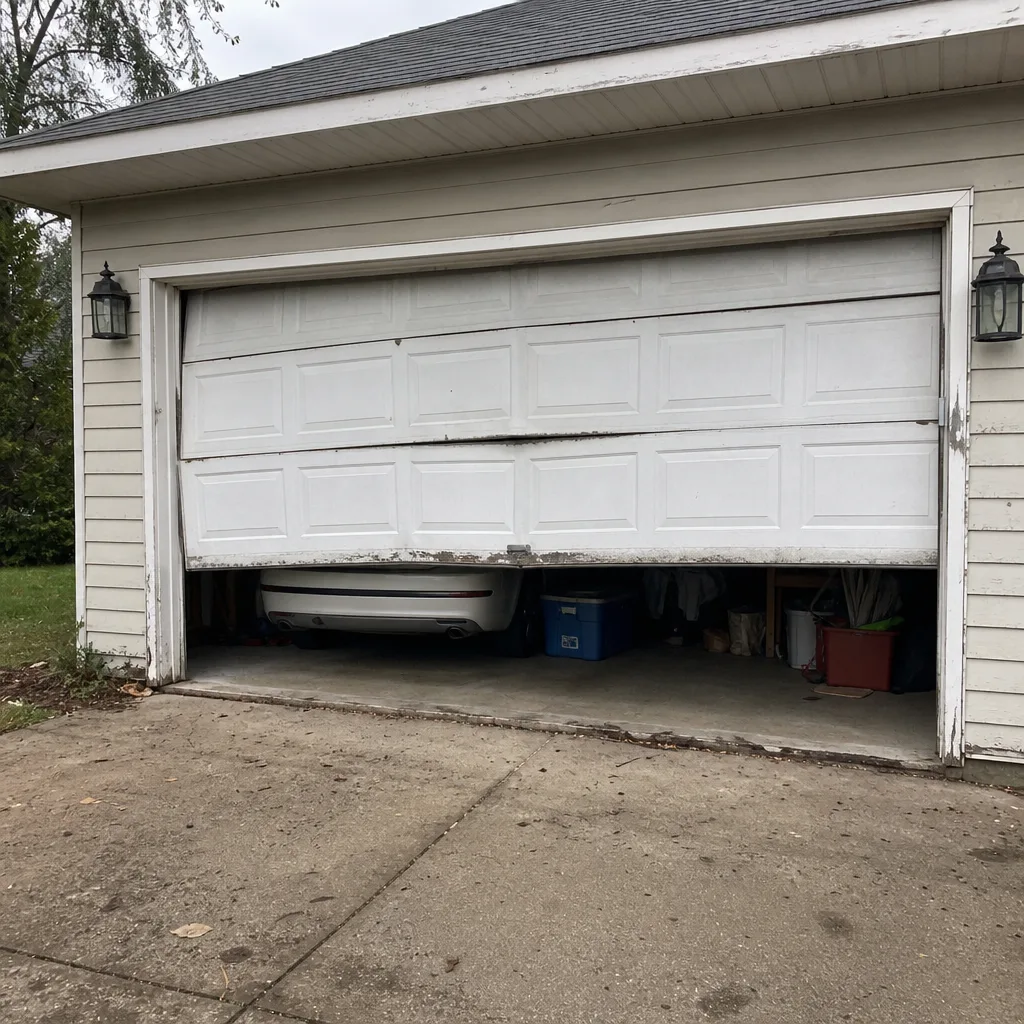 Before
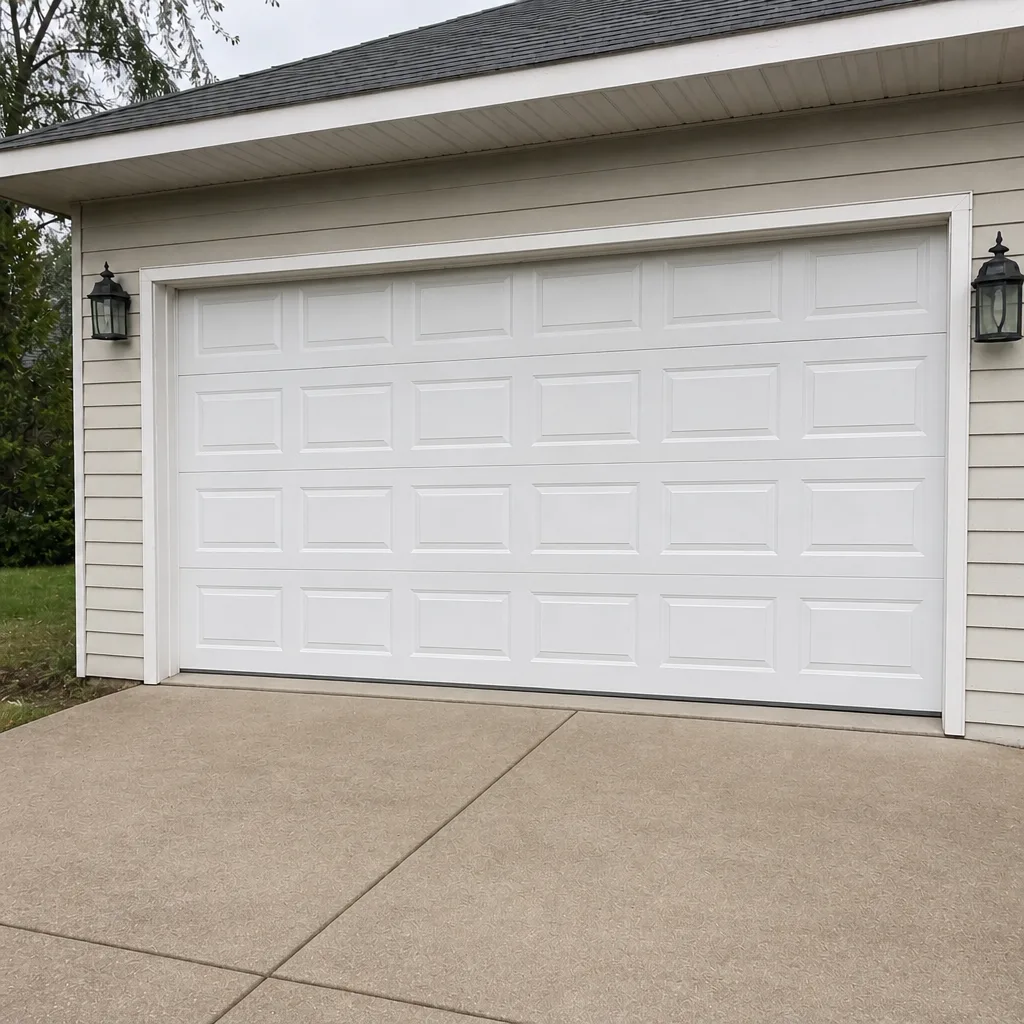 After
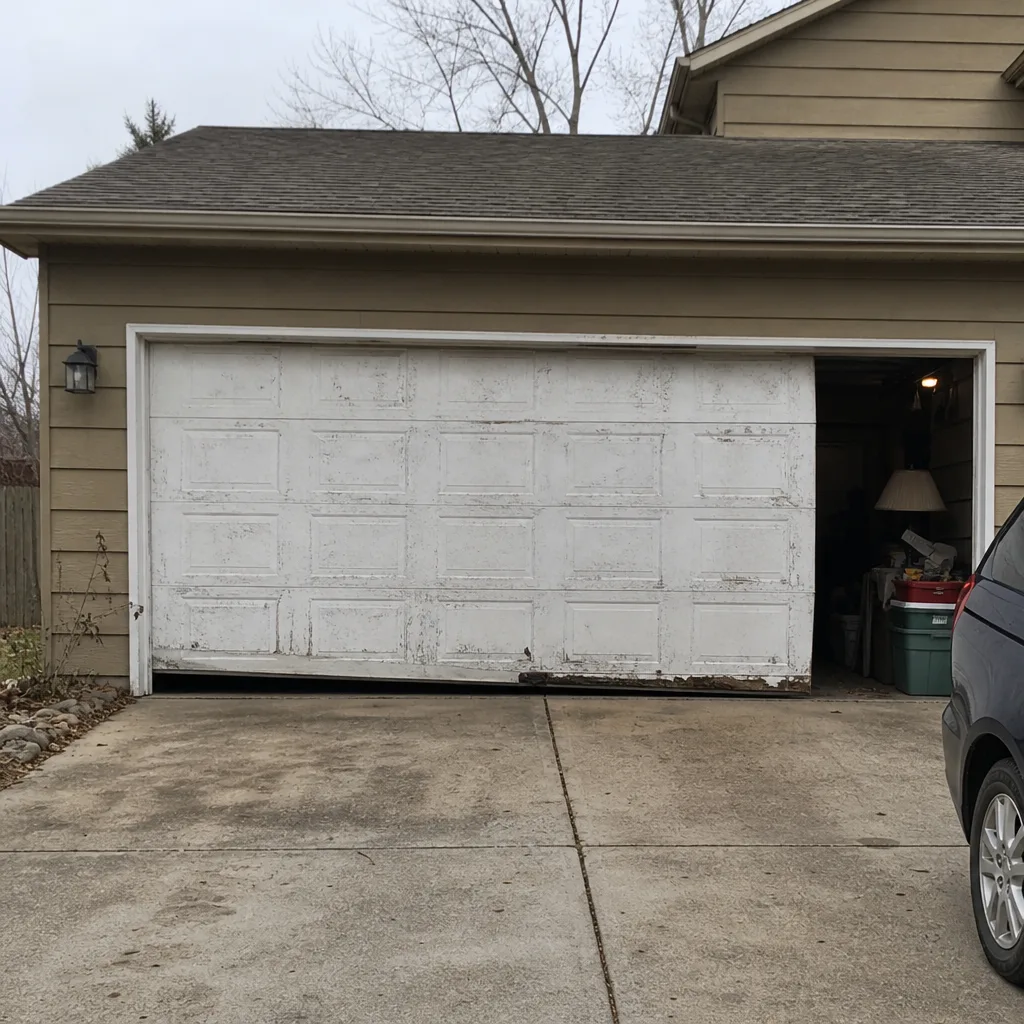 Before
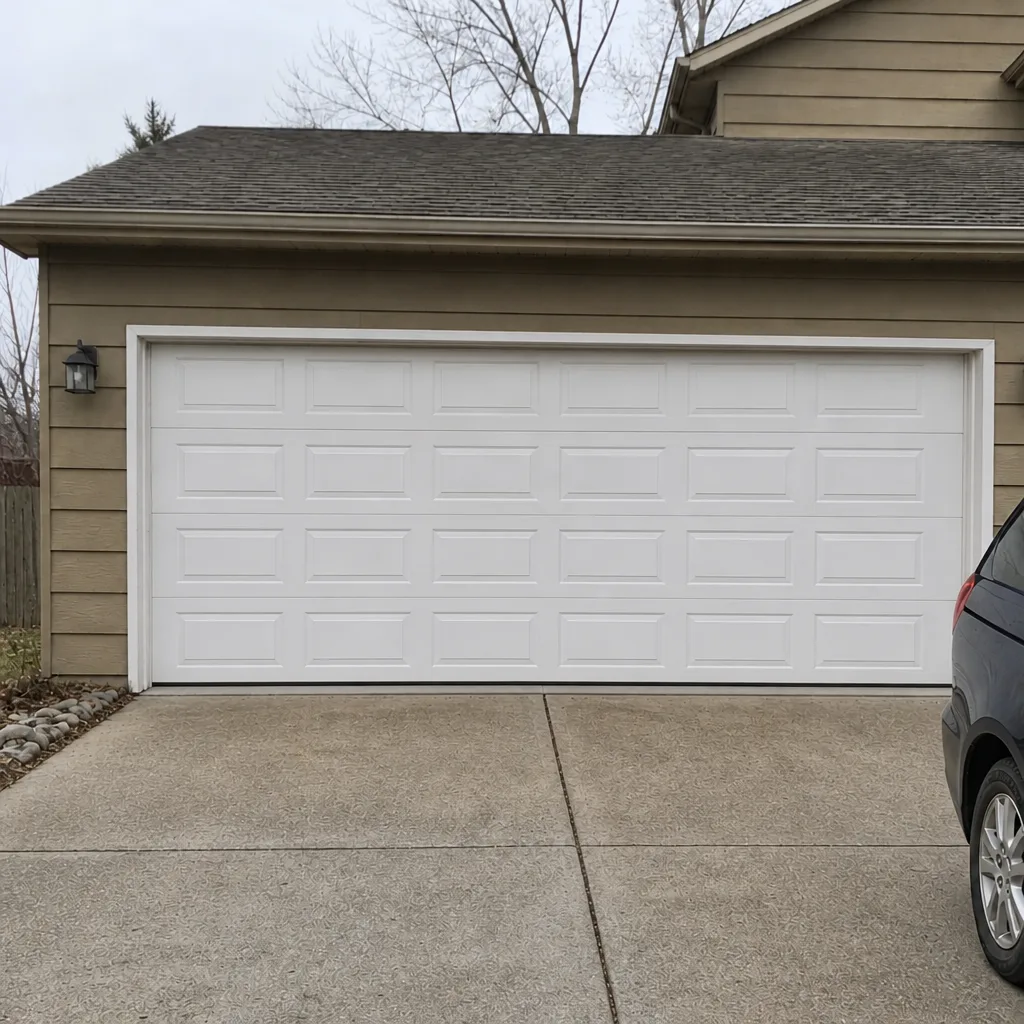 After
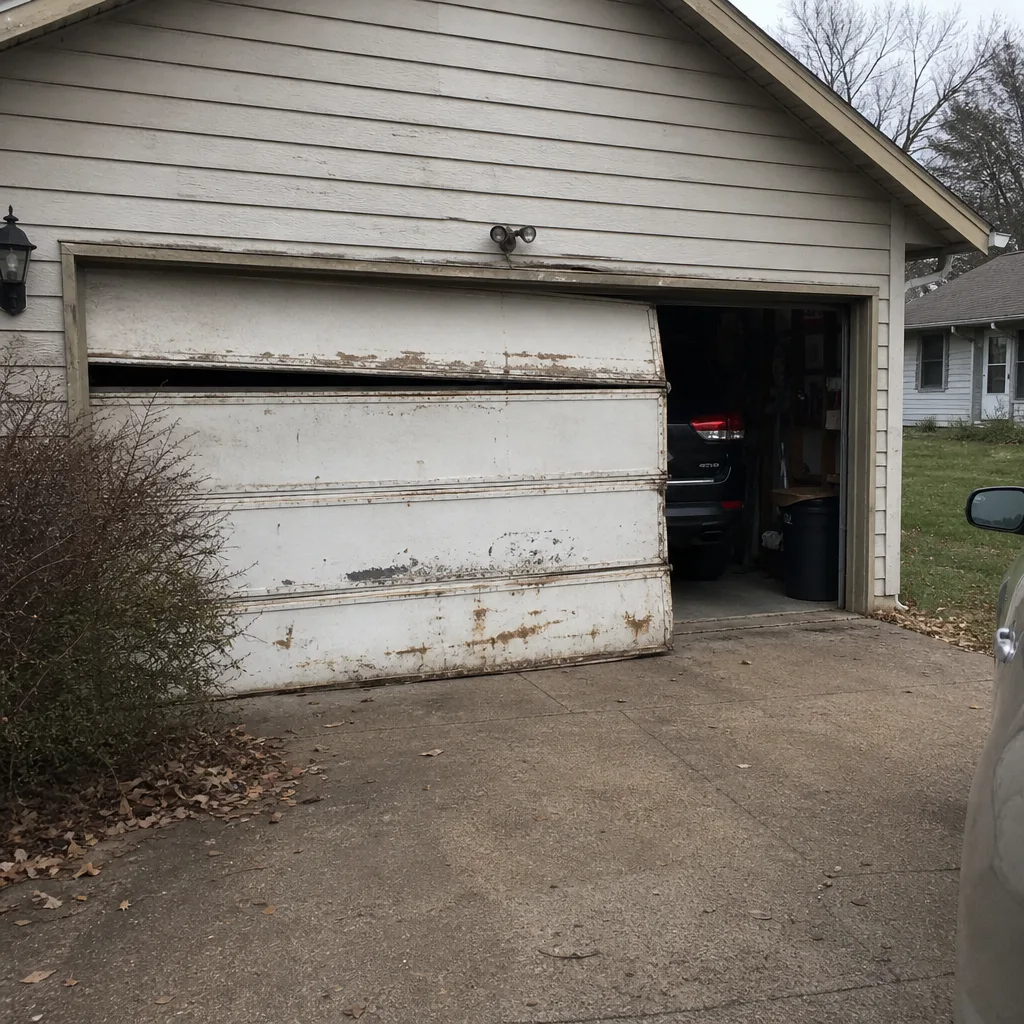 Before
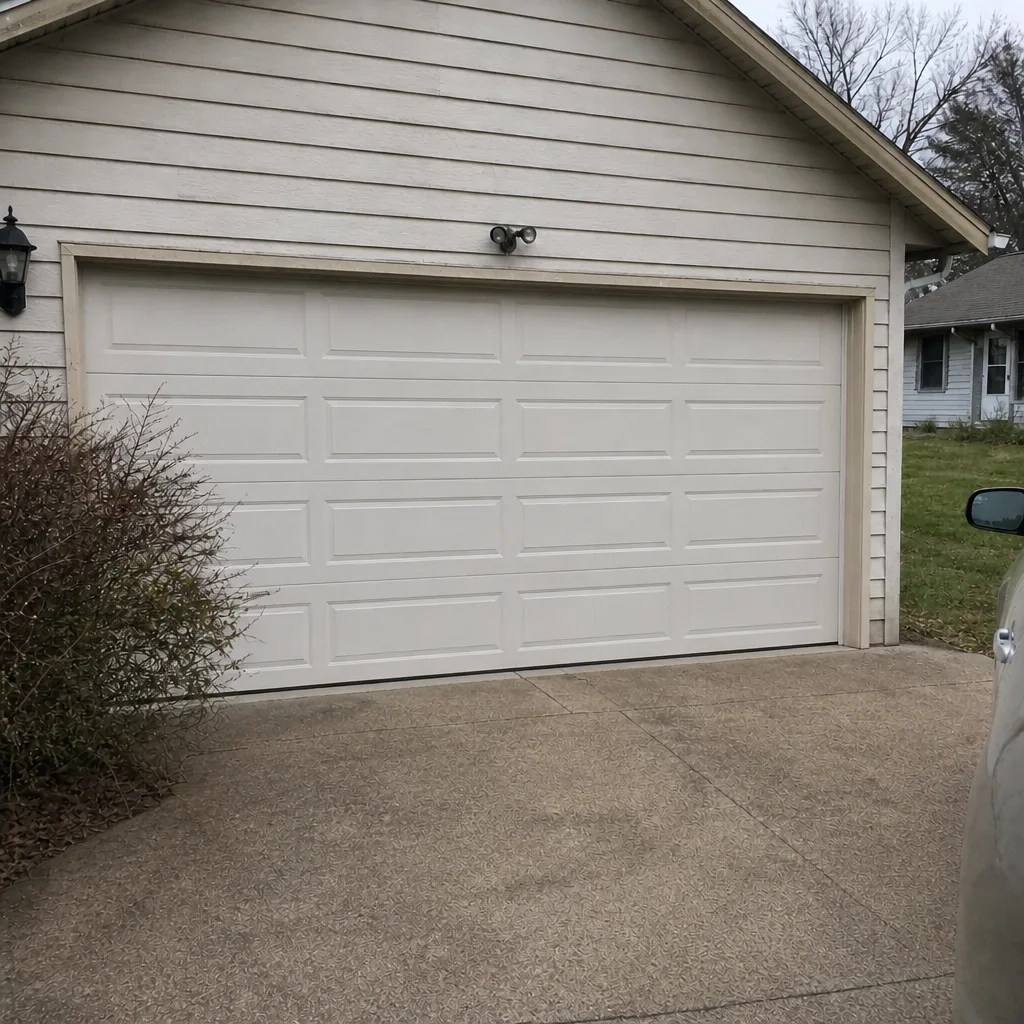 After
When to Call a Professional
Call a technician when the door won’t open evenly, when you hear a snap and the door won’t lift, when the opener reverses or grinds, when the door is visibly out of line in the tracks, or when a spring or cable is broken. Those are the jobs where the risk is real and the diagnosis matters. Call us at (866) 937-8168 for any of them: we treat emergency calls as a genuine availability, not a marketing line. Garage Door Repair Plymouth offers free estimates in Plymouth, the written quote is the price you agree to before work starts, and the technicians we connect you with are vetted and licensed as the state requires. If you want a new door or a full replacement instead, start with a measure and a written price rather than a phone quote.
Frequently Asked Questions
A steel door in Plymouth typically lasts 15 to 20 years with the bottom seal and paint kept up, because the climate’s main attack is at the bottom edge and the seams. Wood doors last longer only if the finish is maintained on schedule. If the bottom panel is rusting through, the door is near the end of its service life.
Most cities require a permit for a new door system or structural changes, so ask Plymouth’s building department what applies to your specific job before work is scheduled. Your HOA may have a separate approval process, and both should be settled before you order. Call (866) 937-8168 if you want a free estimate to compare against the permit picture.
Garage door repair in Plymouth depends on the part: springs, cables, rollers, and opener work are priced per job by a written estimate, and the estimate is free. The written quote sets the final price, and it’s agreed before any work starts. Call (866) 937-8168 for an exact quote.
Same-day service is part of our emergency offering, and a broken spring or a door stuck down is the kind of call we treat as urgent. Call (866) 937-8168. We answer 24/7. Fast dispatch from 7am to 7pm, Sunday through Friday, and a call outside dispatch hours is booked into the next opening.
No. The written estimate is the price you agree to before any work starts, and it doesn’t move because the job took longer or the diagnosis was more involved. If we find something the estimate didn’t cover, we’ll tell you before we do it.
We service LiftMaster, Chamberlain, Genie, Clopay, Amarr, Wayne Dalton, Craftsman, and Raynor. Our technicians are factory-familiar with that set, which means fewer surprises on the first visit. If you’re not sure what you have, the brand label is usually on the end stile of the door or on the opener’s motor head. Call (866) 937-8168 for a free estimate.
The Bottom Line
Plymouth’s climate and housing stock decide most of the garage door questions that national guides skip. Freeze-thaw cycles wear out bottom seals and springs first. Ranch and two-story layouts each set their own headroom and track constraints. HOA covenants in Plymouth subdivisions need checking before you order. And an insulated door’s real performance depends on the seal and the install as much as the R-value on the label. Steel and composite handle the humidity swings best; wood needs maintenance on a schedule. Repair is usually the right answer for springs, cables, and openers, and replacement makes sense when panels fail or the door is wrong for the garage. Get the measure, get the written price, and don’t touch torsion springs yourself.
Ready to sort out your door? Call Garage Door Repair Plymouth at (866) 937-8168 for a free estimate. We answer 24/7. Fast dispatch from 7am to 7pm, Sunday through Friday. Our technicians have up to 9 years of experience, we work on your brand, and the written quote is set before any work starts.
Written by the team at Garage Door Repair Plymouth.